
A pressure washer is a valuable tool for cleaning driveways, decks, patios, vehicles, and outdoor furniture. Like any power equipment, it requires regular maintenance to deliver reliable performance and prevent expensive repairs. Simple maintenance tasks can improve cleaning efficiency, reduce wear on components, and significantly extend the lifespan of both electric and gas pressure washers.
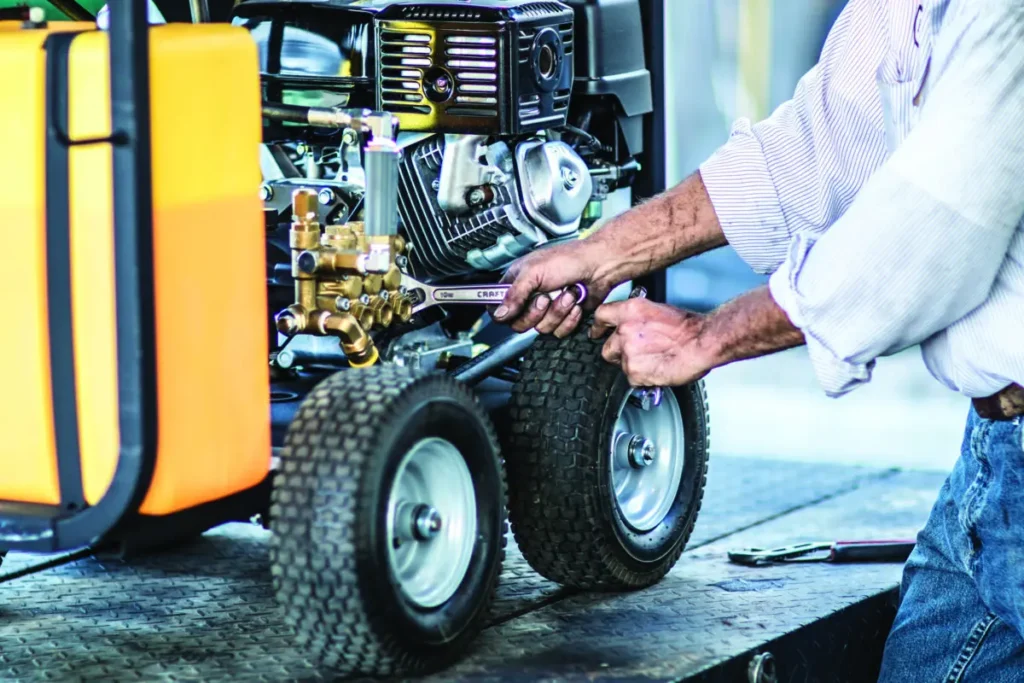
This guide covers everything you need to know about pressure washer maintenance, including routine care, seasonal storage, and troubleshooting tips.
Why Pressure Washer Maintenance Matters
Routine maintenance helps:
- Extend the life of the pump and motor
- Maintain consistent water pressure
- Prevent clogs and leaks
- Improve cleaning performance
- Reduce repair costs
- Protect the machine during storage
Spending a few minutes maintaining your pressure washer after each use can save both time and money in the long run.
Pressure Washer Maintenance Schedule
| Maintenance Task | Frequency |
|---|---|
| Inspect hoses and fittings | Before every use |
| Clean the spray nozzle | After every use |
| Flush detergent system | After every use |
| Clean the water inlet filter | Monthly |
| Check for leaks | Before every use |
| Inspect high-pressure hose | Monthly |
| Change pump oil (if applicable) | Every 50–100 hours or as recommended |
| Change engine oil (gas models) | Every 50 hours or annually |
| Replace spark plug (gas models) | Annually |
| Winterize the machine | Before freezing temperatures |
1. Inspect the Hoses
Before each use, inspect both the garden hose and the high-pressure hose.
Look for:
- Cracks
- Bulges
- Leaks
- Abrasion
- Loose fittings
Replace damaged hoses immediately to prevent pressure loss or failure during operation.
2. Clean the Spray Nozzle
Small debris can clog the nozzle and reduce cleaning performance.
After each use:
- Turn off the pressure washer.
- Remove the nozzle.
- Use the included nozzle cleaning tool or a fine wire to clear debris.
- Rinse with clean water.
- Reinstall securely.
Never enlarge the nozzle opening with drills or oversized tools.
3. Flush the Detergent System
If detergent was used:
- Place the detergent siphon in clean water.
- Run the pressure washer for several minutes.
- Flush until only clean water exits the spray wand.
This prevents detergent residue from clogging the system.
4. Clean the Water Inlet Filter
Most pressure washers include a small screen filter where the garden hose connects.
To clean it:
- Remove the filter.
- Rinse under running water.
- Remove dirt and debris.
- Reinstall once clean.
A clogged filter restricts water flow and may damage the pump.
5. Check for Water Leaks
Inspect the machine before and during operation.
Common leak locations include:
- Hose connections
- Pump fittings
- Spray gun
- O-rings
- Quick-connect couplers
Replacing worn O-rings is often an inexpensive solution to minor leaks.
6. Inspect the High-Pressure Hose
The high-pressure hose operates under significant pressure.
Check regularly for:
- Cuts
- Cracks
- Blisters
- Kinks
- Worn outer covering
Never repair a damaged high-pressure hose with tape. Replace it if damaged.
7. Change Pump Oil (If Required)
Some pressure washer pumps are maintenance-free, while others require periodic oil changes.
If your model has a serviceable pump:
- Follow the manufacturer’s maintenance schedule.
- Use only the recommended pump oil.
- Check the oil level before extended use.
Consult your owner’s manual for specific intervals.
8. Maintain the Engine (Gas Models)
Gas-powered pressure washers require additional maintenance.
Change Engine Oil
Replace engine oil according to the manufacturer’s recommendations or after approximately every 50 hours of operation.
Replace the Air Filter
Clean or replace the air filter when dirty.
A clean filter improves:
- Fuel efficiency
- Engine performance
- Engine life
Replace the Spark Plug
Install a new spark plug annually or as recommended by the manufacturer.
A worn spark plug can cause hard starting and poor engine performance.
9. Protect the Pump During Storage
Water left inside the pump can cause corrosion or freeze damage.
Before storing:
- Disconnect all hoses.
- Run the machine briefly without the water supply (only if allowed by the manufacturer) to help remove residual water from the hose and wand. Avoid running the pump dry for more than a few seconds.
- Drain remaining water.
- Use a pump protector or pump antifreeze product if recommended.
Pump protection is especially important before winter.
10. Store the Pressure Washer Properly
Store the machine:
- Indoors when possible
- In a dry location
- Away from freezing temperatures
- With hoses neatly coiled
- Out of direct sunlight
Proper storage helps prevent rust, cracked hoses, and pump damage.
Winterizing a Pressure Washer
If temperatures may fall below freezing:
- Disconnect the water supply.
- Drain all hoses.
- Empty the pump as directed by the manufacturer.
- Apply pump protector or antifreeze if recommended.
- Store the machine in a frost-free location.
Frozen water inside the pump is one of the most common causes of pressure washer failure.
Common Pressure Washer Problems
Low Water Pressure
Possible causes:
- Clogged nozzle
- Dirty inlet filter
- Air trapped in the system
- Water supply restrictions
- Worn pump
Pulsing Pressure
Possible causes:
- Air leaks
- Dirty nozzle
- Clogged filter
- Inadequate water supply
Water Leaks
Possible causes:
- Damaged O-rings
- Loose fittings
- Cracked hoses
- Worn seals
Engine Won’t Start (Gas Models)
Possible causes:
- Old fuel
- Dirty spark plug
- Clogged air filter
- Low oil level
- Fuel valve closed
Pressure Washer Maintenance Tips
To keep your pressure washer operating efficiently:
- Always use clean water.
- Never allow the pump to run dry.
- Flush detergent after every use.
- Use the correct nozzle for each job.
- Relieve system pressure before disconnecting hoses.
- Replace worn seals promptly.
- Follow the manufacturer’s maintenance schedule.
Common Maintenance Mistakes
Avoid these common errors:
- Storing the machine with water inside the pump
- Ignoring small leaks
- Using dirty water without proper filtration
- Running the pressure washer without sufficient water supply
- Forgetting to flush detergent
- Skipping engine oil changes on gas models
- Leaving the machine outdoors year-round
Frequently Asked Questions
How often should I service my pressure washer?
Basic maintenance should be performed after every use. More extensive servicing, such as oil changes and filter inspections, should follow the manufacturer’s recommended maintenance schedule.
Can I leave water inside the pressure washer?
No. Water left inside the pump can cause corrosion or freeze damage. Always drain the machine before storage.
How long does a pressure washer typically last?
With proper maintenance, a quality residential pressure washer can often last 5 to 10 years, while commercial-grade models may last even longer.
Should I use pump protector?
Yes. Pump protector is recommended before long-term storage or winter storage because it helps lubricate internal seals and reduces the risk of freeze-related damage.
Final Thoughts
Regular pressure washer maintenance is the key to dependable performance and a long service life. Cleaning the nozzle, inspecting hoses, flushing the detergent system, maintaining the pump and engine, and storing the machine properly all help prevent common problems and costly repairs.
By following a simple maintenance routine after each use and preparing your pressure washer for seasonal storage, you can keep it operating safely and efficiently for many years.